
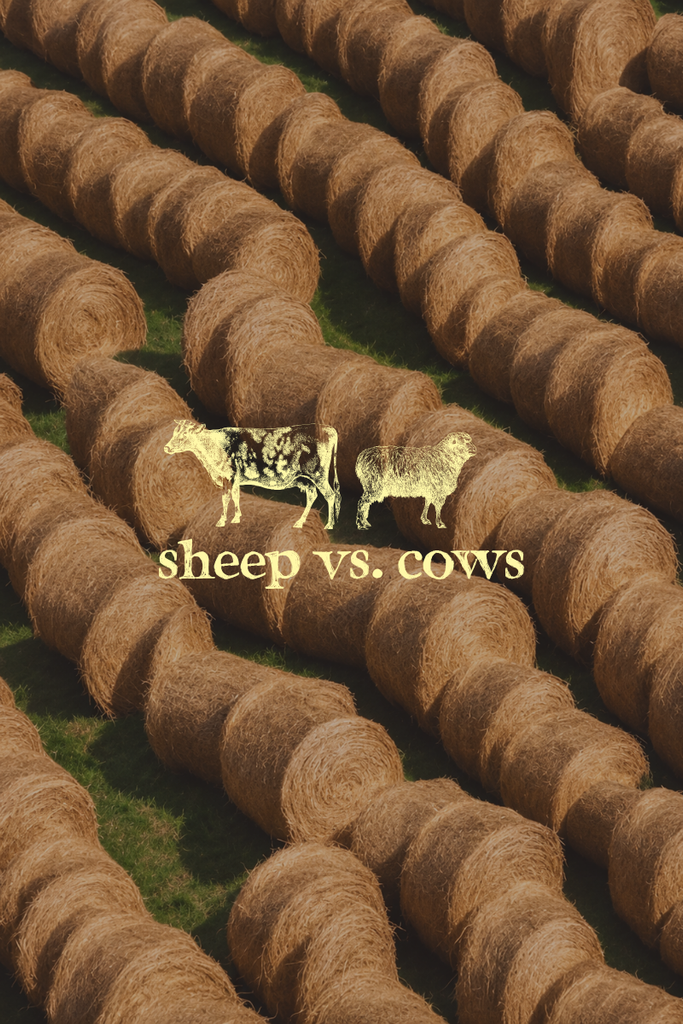
If you’re thinking about starting a ranch, one of the first decisions you’ll need to make is what kind of livestock to raise. For many aspiring ranchers, the choice comes down to raising sheep vs. cows
Both sheep and cattle can provide meat, help manage pastureland, and become an important part of a working ranch. But they have different needs when it comes to land, fencing, feed, handling, health management, and daily care.
So, is raising sheep easier than raising cows? Which animal is more affordable to start with? And which is the better fit for a small ranch or a first-generation ranching family?
The answer depends on your land, your goals, your budget, and how you want to run your operation. Here’s what to know about raising sheep versus cattle before deciding which is right for you.
1. Land Requirements: How Much Land Do Sheep and Cows Need?
One of the biggest differences between raising sheep and cows is how they use available pasture.
Cattle are larger animals that require more forage per head, while sheep are smaller and generally consume less forage individually.
This means you can typically raise more sheep than cows on the same amount of land, although the actual stocking rate depends on your pasture’s productivity.
Raising Cows
Cattle need sufficient pasture to provide the forage they require throughout the grazing season. On productive pasture, you may be able to support more cattle per acre than you could on dry, low-quality rangeland. In arid regions, however, a single cow may require many acres to meet her nutritional needs.
Before bringing cattle onto your property, consider:
- How much grazeable acreage you have.
- The quality and availability of native grasses and other forage.
- Seasonal changes in pasture production.
- Whether you’ll need to purchase hay during winter or drought.
- Your ability to rotate cattle between pastures.
Raising Sheep
Sheep can be a good fit for smaller operations because they require less forage per animal. They also graze differently from cattle, often eating a wider variety of plants, including broadleaf plants and some brush.
This can make sheep useful for managing certain types of vegetation, depending on the plants available and the grazing strategy.
However, sheep still need adequate forage, water, minerals, and protection from predators. Their smaller size doesn’t mean they can thrive on poor-quality pasture indefinitely.
2. Startup Costs: Is It Cheaper to Raise Sheep or Cows?
If you’re starting a ranch from scratch, the initial investment matters.
Raising Sheep vs. Cows: The cost of purchasing livestock is only one part of the equation. You’ll also need fencing, handling facilities, water access, feed, veterinary care, and equipment appropriate for your animals.
The cost of raising cattle
Cattle generally cost more per animal to purchase than sheep. You’ll also need facilities and equipment that can safely handle larger, heavier animals.
Depending on your operation, startup expenses may include:
- Purchasing cows, calves, or breeding stock.
- Installing or upgrading cattle fencing.
- Building corrals, gates, and a loading area.
- Providing hay storage and feeding equipment.
- Purchasing or accessing cattle-handling equipment.
- Budgeting for veterinary care, minerals, and breeding.
The cost of raising sheep
Sheep often have a lower purchase price per animal, which can make it easier to begin with a smaller flock. Basic handling facilities can also be less expensive than those needed for cattle, although good sheep infrastructure is still essential.
Common startup expenses include:
- Purchasing ewes and a breeding ram, or feeder lambs.
- Installing sheep-appropriate fencing.
- Building secure pens and handling areas.
- Providing feeders, waterers, and mineral supplements.
- Purchasing hay and supplemental feed when needed.
- Budgeting for veterinary care, parasite management, and lambing supplies.
SHOP MY LIST OF MUST HAVES FOR SHEEP
3. Fencing and Predator Protection
Fencing is one of the most important practical differences between sheep and cattle. Cattle are large, powerful animals. They need fencing that can withstand their size and behavior, particularly around gates, corners, and areas where they may push against a fence. Fencing may include barbed wire, high-tensile wire, woven wire, or electric fencing. Sheep can be surprisingly good at finding weaknesses in a fence. They may slip through gaps, push under loose wire, or escape through openings that would not be a concern for cattle. Sheep fencing needs to account for both the size of the animals and the possibility of predator attacks.
4. Feeding and Daily Care
Both sheep and cattle are ruminants, meaning they have specialized digestive systems that allow them to digest fibrous plant material. However, their nutritional needs differ, and their management requires different considerations. Cows generally consume more forage per animal because of their larger body size. A mature cow’s daily intake varies with her weight, pregnancy status, lactation, forage quality, and other factors. Depending on your region and the season, cattle may graze native range, improved pasture, or a combination of pasture and harvested forage such as hay. Many ranchers must plan around seasonal forage availability. Depending on the property and year, supplemental hay or other feed may be necessary when pasture production is insufficient.
Sheep also depend on quality forage, and their nutritional requirements change throughout the year. Pregnant ewes, nursing ewes, and growing lambs have different needs from mature sheep that are not breeding. Sheep may benefit from a grazing system that combines grasses with suitable forbs and browse. Supplemental hay or grain may be necessary when forage alone does not meet nutritional requirements. They also need a mineral program formulated specifically for them.
Sheep are particularly sensitive to copper toxicity, so cattle mineral mixes should not be used for sheep unless a veterinarian or qualified nutrition professional confirms that the formulation is appropriate.
5. Health Management and Veterinary Care
Raising Sheep vs. Cows is similar in the sense of both need routine health care, but they have different management challenges.
Cattle producers may need to manage issues such as:
- Respiratory disease, particularly in recently transported or stressed cattle.
- Calving complications.
- Lameness and hoof problems.
- Internal and external parasites.
- Vaccination and reproductive health programs.
Large animals can be more difficult to restrain and treat without appropriate handling facilities, so safe equipment and good animal-handling practices are important.
Sheep producers must pay particular attention to:
- Internal parasites, especially in grazing systems.
- Foot health and hoof problems.
- Pregnancy and lambing management.
- Lamb survival and nutrition.
- Appropriate vaccination and mineral programs.
Parasite management is a major consideration for sheep. Depending on the environment and grazing system, internal parasites can cause significant production losses. Responsible management may involve fecal testing, targeted deworming, pasture management, and monitoring animals for signs of illness.
6. Breeding and Raising Young Animals
Both sheep and cattle can be raised for meat production, with breeding programs designed around the goals of the ranch. However, their reproductive timelines and the amount of care young animals require are different.
Cattle reproduction
A cow’s gestation period is approximately nine months. Calving typically occurs once per year in a seasonal breeding operation.
Calves generally stay with their mothers while nursing and grazing before they are weaned. Depending on the operation, calves may be sold at weaning, retained for further growth, or finished for beef.
Cattle breeding programs require planning around bull management, breeding seasons, pregnancy checks, calving facilities, and the nutritional needs of pregnant and nursing cows.
Sheep reproduction
A ewe’s gestation period is approximately five months. Many sheep producers aim for one lambing season per year, although some breeds and management systems can support different breeding schedules.
Depending on the breed, age, nutrition, and genetics, ewes may give birth to single lambs, twins, or occasionally triplets.
Lambing can be an exciting but demanding time. Newborn lambs are small and vulnerable, so producers must pay attention to bonding, nursing, weather conditions, and signs of illness.
A shorter gestation period and the possibility of multiple lambs per ewe can allow a sheep operation to produce more offspring relative to the number of breeding females. However, higher lamb numbers also mean more nutritional demands, more potential health issues, and more management decisions.
7. Meat Production: Lamb vs. Beef
If your goal is to raise livestock for meat, your choice between raising Sheep vs. Cows will affect everything from production timelines to processing and marketing. Beef is a familiar protein for many American consumers. Cattle can be raised in a variety of production systems, including grass-based operations and systems that use supplemental feed or grain finishing. Depending on the animal’s genetics, nutrition, and production goals, it can take many months or more than a year for cattle to reach the desired market weight.
Lamb offers a different opportunity for meat producers. Sheep generally reach market readiness sooner than cattle, although the timeline depends on breed, starting weight, nutrition, and the desired finished weight. Lamb can be sold through traditional livestock markets, processors, restaurants, or direct-to-consumer channels, depending on local regulations and the producer’s business model.
I WROTE A POST ABOUT LAMB MEAT NUTRITION… READ IT HERE!
One of the challenges of selling lamb is that some consumers are less familiar with how to cook it than they are with beef. Producers who sell directly to customers may need to provide recipes, cooking tips, cut guides, and information about what makes lamb different from other meats.
8. Profitability: Can You Make More Money Raising Sheep or Cows?
There is no universal answer to whether sheep or cattle are more profitable. A profitable ranch depends on the relationship between your production costs, the number of animals you can sustainably raise, the price you receive for your products, and the amount of labor required. Cattle may generate more revenue per animal because of their larger size and the amount of beef they produce. However, the initial investment and ongoing costs can also be higher. Sheep may offer a lower barrier to entry and the ability to produce multiple lambs from a ewe in a breeding season. But profitability can be affected by predator losses, parasite management, lambing labor, fencing expenses, and local demand for lamb.
9. Which Is Better for a First-Time Rancher? Raising Sheep vs. Cows
If you’re new to ranching, it can be tempting to choose whichever animal seems easiest or least expensive. But the best starting point is to consider the land, infrastructure, experience, and market you already have access to.
Sheep may be a good fit if:
- You want to begin with a smaller initial investment.
- Your available acreage is better suited to sheep than cattle.
- You have a reliable plan for predator protection.
- You’re interested in selling lamb or developing a specialty meat market.
- You’re prepared to learn about lambing, parasite control, and flock management.
Cows may be a good fit if:
- You have enough productive pasture or suitable rangeland.
- You can afford the higher per-animal investment.
- Your property has appropriate fencing and cattle-handling facilities.
- You’re interested in producing beef for a familiar consumer market.
- You have access to the equipment, feed, and labor needed for a cattle operation.
10. Can You Raise Sheep and Cows Together?
Yes. Many ranches raise both sheep and cattle, and the two species can complement each other in a carefully managed grazing system. Because sheep and cattle select different plants to some extent, grazing them together or in rotation may improve the use of available forage. Mixed-species grazing can also help diversify a ranch’s products and revenue sources. However, the benefits depend on your land, forage, livestock numbers, and management practices. You’ll need to consider fencing, separate mineral requirements, predator protection for sheep, handling facilities, and the health risks associated with introducing or co-grazing different species. Raising both animals also means managing two sets of nutritional needs, breeding schedules, and health concerns. For a beginner, it may be more practical to establish a successful operation with one species before adding another.
Our Experience Raising Sheep as First-Generation Ranchers
Building a ranch isn’t simply about choosing an animal and turning it out on pasture. It’s about learning your land, understanding your livestock, managing resources, and making decisions that support the long-term health of the operation.
We chose to raise sheep, with an emphasis on producing quality lamb for families who want to know where their food comes from with the hopes of getting into the beef market eventually.
One of the things we appreciate about sheep is the opportunity to start with a smaller flock and grow the operation as we gain experience and resources. That doesn’t mean sheep are always the easier choice. Predator protection, breeding, lambing, fencing, and nutrition all require careful attention. Every livestock operation comes with its own learning curve.
For us, ranching is about more than the animals themselves. It’s about learning to care for the land, producing food responsibly, and building something meaningful for our family.
If you’re considering sheep or cattle, take the time to evaluate your resources before making a purchase. Talk with local ranchers, learn about the markets in your area, and build a realistic budget. The right choice is the one that fits your land, your goals, and the kind of ranch you want to build.
INTERESTED IN PURCHASING MEAT FROM US? CLICK HERE!
Final Thoughts: Raising Sheep vs. Cows
So, which is better? Raising Sheep vs. Cows…
Sheep may be a good fit for ranchers looking for a lower-cost entry point, a smaller livestock species, or an opportunity to sell lamb directly to consumers. Cattle may be a better fit for operations with adequate acreage, suitable infrastructure, and a business model built around beef production.
Neither is automatically easier, cheaper, or more profitable. Both require sound nutrition, health management, good fencing, and a clear understanding of the market.
Start with your land and your goals, do your research, and choose the livestock that makes sense for your operation.
And remember: you don’t have to build your dream ranch overnight. Start with what you can manage well, learn as you go, and grow from there.


hey there!
I'm Sarah Elrod
I'm one half of Elrod Ranch and the person you will likely hear from the most! I am the creative marketer behind our brand. I'm a photographer, social media lover, and entrepreneurship nerd.
I'm super passionate about sharing our faily story and day to day lives which is exactly what you can expect around here!
Everything from recipes I am cooking up, to the animals we have, my best hacks for raising cow kids and more!
I'm so glad you're here!
- Top Categories -
