
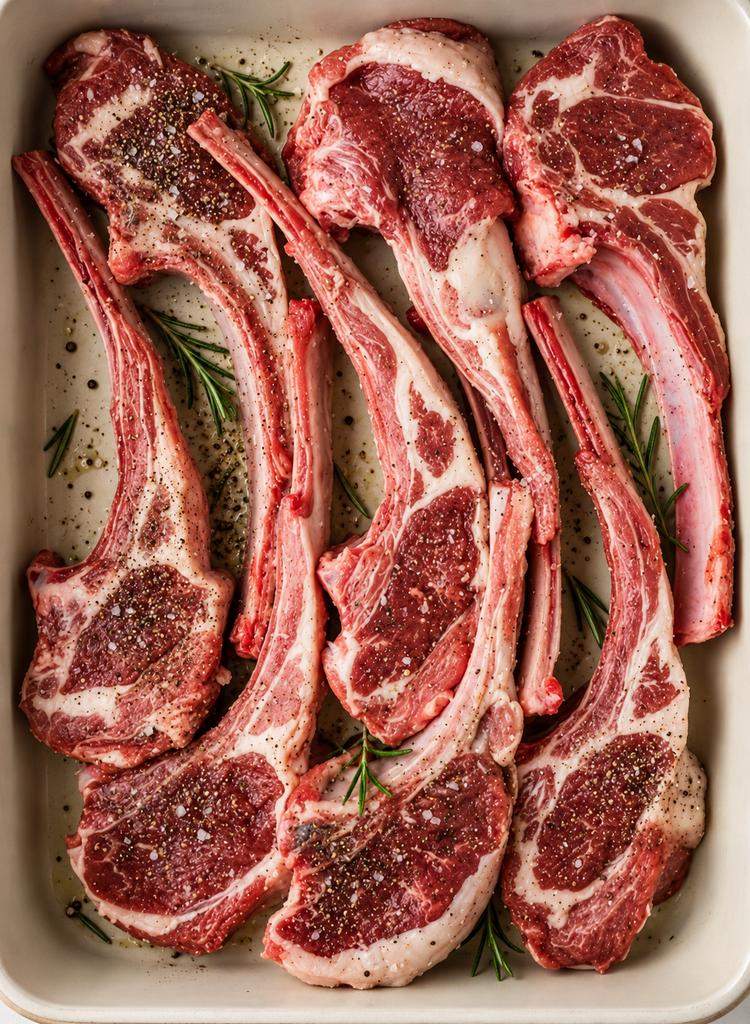
When it comes to choosing meat for your family, beef is often the familiar choice. Steaks on the grill, burgers for dinner, and a roast in the oven are staples in many American homes. But what about lamb?
Lamb is a flavorful, versatile protein that deserves a place at the dinner table. Whether you’re curious about trying it for the first time or wondering how it compares to beef nutritionally, there are a few key differences worth understanding.
We’re first-generation ranchers raising sheep in Nevada, and we’re passionate about helping families learn more about lamb and where their food comes from.
Let’s look at five key differences between lamb and beef, from flavor and nutrition to cooking methods and sustainability.
1. Flavor: What Does Lamb Taste Like Compared to Beef?
One of the biggest differences between lamb and beef is flavor.
Beef has a familiar, savory taste that varies depending on the cut, breed, animal’s diet, and cooking method. Lamb has a distinctive flavor that’s often described as rich, savory, and slightly earthy.
Some people assume lamb has an overpowering taste, but that isn’t always the case. The flavor depends on the animal’s age, diet, cut of meat, and preparation. Younger lamb generally has a milder flavor than older sheep meat.
If you’re new to cooking lamb, ground lamb is an excellent place to start. It works well in burgers, meatballs, pasta sauces, tacos, and Mediterranean-inspired dishes. Season it with garlic, rosemary, oregano, or cumin for a delicious meal.
The takeaway: Beef is familiar and savory, while lamb offers a distinctive, rich flavor that can bring something new to your favorite recipes.
2. Nutrition: Is Lamb Healthier Than Beef?
Both lamb and beef provide high-quality protein and important nutrients. Neither is automatically healthier than the other, because nutritional content depends on the cut, fat content, serving size, and cooking method.
Both meats provide:
- Protein: Supports muscle growth, maintenance, and tissue repair.
- Iron: Helps your body produce hemoglobin, which carries oxygen in the blood.
- Vitamin B12: Supports healthy nerve function and red blood cell formation.
- Zinc: Supports immune function and wound healing.
Lamb and beef can both fit into a balanced diet. Some cuts are relatively lean, while others contain more fat. Comparing similar cuts and trimming visible fat can help you make informed choices.
If nutrition is a priority, look at the specific cut rather than assuming all lamb or all beef has the same nutritional profile.
I WROTE AN ENTIRE POST ON LAMB NUTRITION… READ IT HERE!
3. Cooking: Can You Substitute Lamb for Beef?
Absolutely! While lamb and beef have different flavors, many cuts can be used in similar recipes.
The best substitution depends on the dish and the cut of meat you’re using.
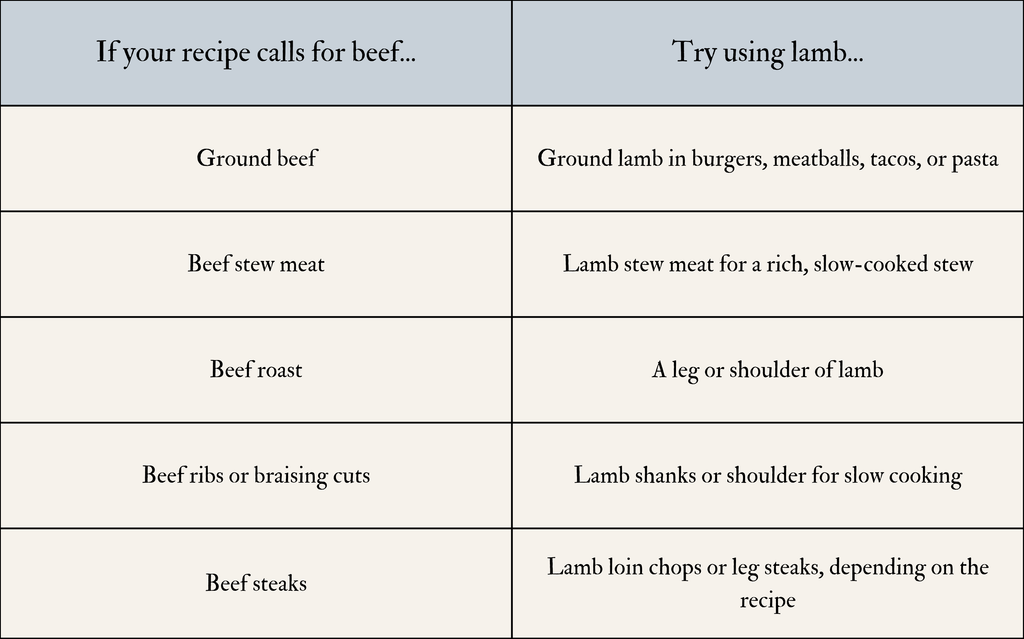
Keep in mind that cooking times and ideal temperatures can vary by cut and thickness. Use a reliable recipe and a meat thermometer rather than assuming lamb and beef will cook identically.
Lamb pairs particularly well with garlic, rosemary, thyme, mint, lemon, and warm spices. You can also use your favorite beef seasonings when cooking lamb.
4. Price and Availability: Is Lamb More Expensive Than Beef?
In many American grocery stores, lamb is more expensive per pound than common cuts of beef. However, prices vary by location, cut, season, and whether you’re purchasing conventional meat or buying directly from a ranch.
Beef benefits from a large, established consumer market in the United States, which means shoppers are often familiar with its cuts, prices, and cooking methods.
Lamb can be less familiar, but buying a variety of cuts or purchasing directly from a producer may offer options that fit your household’s needs.
When comparing prices, consider the cost per serving rather than just the price per pound. Ground lamb, for example, may be a practical way to introduce lamb into your regular meal rotation without purchasing more expensive specialty cuts.
Buying directly from a ranch can also help you learn about how the animals were raised, where the meat comes from, and which cuts might work best for your family.
5. Sustainability and Farming: How Are Sheep and Cattle Raised Differently?
The environmental impact of lamb and beef depends on how the animals are raised, the land they graze, the feed they consume, and the overall management of the ranch.
Sheep and cattle are both ruminants, meaning they digest fibrous plants through a specialized digestive system. Both produce methane as part of this natural process.
However, sheep and cattle differ in size, grazing behavior, feed requirements, and the amount of meat produced per animal.
Sheep can graze certain plants that cattle may not readily select, while cattle are well suited to grazing grasses. In some systems, the two species can complement one another through carefully managed grazing.
It’s important not to assume that lamb is automatically more sustainable than beef, or vice versa. Environmental outcomes depend on the entire production system, including land conditions, feed, animal performance, and management practices.
So, Should You Choose Lamb or Beef?
The good news is that you don’t have to choose just one.
Beef is a versatile staple, and lamb offers another delicious option for adding variety to your family’s meals. Both provide valuable nutrients, work in a wide range of recipes, and can be raised in different production systems.
If you’ve never cooked lamb before, start with ground lamb in a recipe your family already enjoys. Once you’re comfortable with the flavor, try lamb chops, a slow-cooked shoulder, or a traditional leg of lamb.
As ranchers, we love helping families discover how versatile lamb can be and understand the work that goes into raising their food.
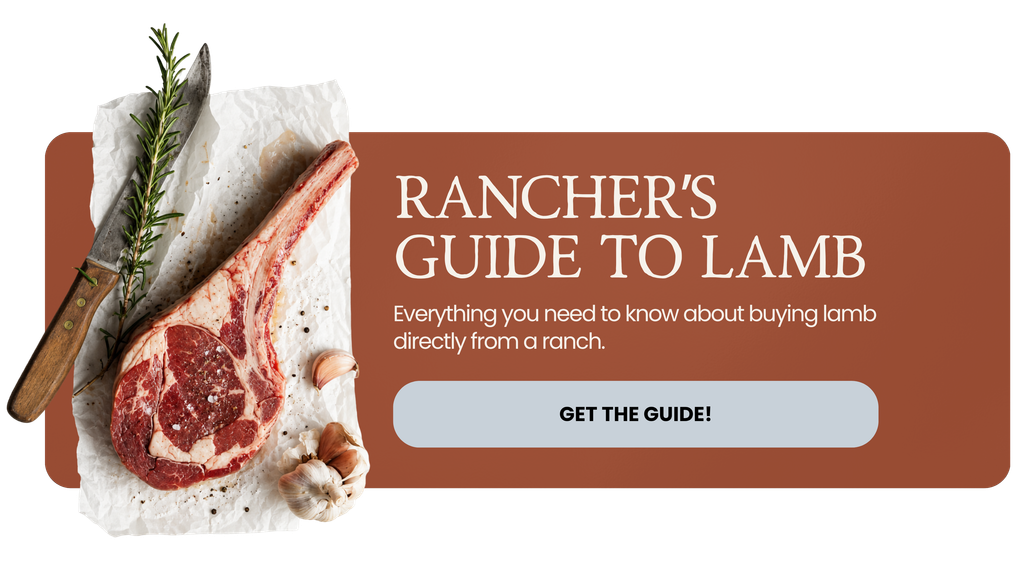
Curious about cooking with lamb? Explore our Rancher’s Guide to Lamb to learn more about lamb cuts, preparation, and ways to bring this delicious protein to your family’s table.
From our ranch to your table, we’re glad you’re here.

hey there!
I'm Sarah Elrod
I'm one half of Elrod Ranch and the person you will likely hear from the most! I am the creative marketer behind our brand. I'm a photographer, social media lover, and entrepreneurship nerd.
I'm super passionate about sharing our faily story and day to day lives which is exactly what you can expect around here!
Everything from recipes I am cooking up, to the animals we have, my best hacks for raising cow kids and more!
I'm so glad you're here!
- Top Categories -
